.webp)
Elden Ring's Open World Design: How Exploration Changes the Soulslike Experience

Introduction
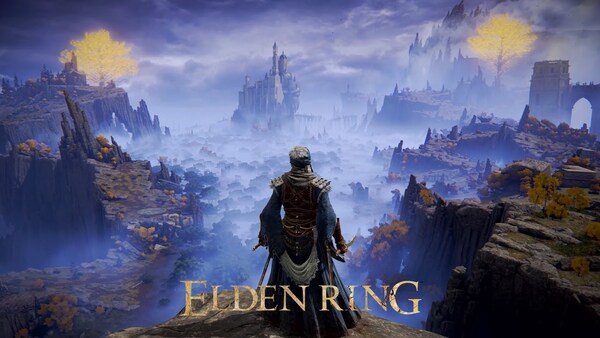
Elden Ring changes the traditional Soulslike formula by giving players a huge open world instead of forcing them through a fixed progression path. Players can explore different regions, find weapons, upgrade their characters, and return to difficult bosses later.
This freedom creates one of the game's most interesting design issues: exploration can significantly change the difficulty. A player who explores extensively may become much stronger than someone who follows the main path. As a result, the same boss can feel extremely difficult for one player and surprisingly easy for another.
Early Game: Learning to Explore
The early game teaches players that they do not always need to defeat a difficult enemy immediately. If a boss is too strong, players can leave, explore another area, collect equipment, and return later.
This creates a different approach to difficulty. Players can overcome challenges through mechanical skill, character progression, or better preparation.
Exploration as Progression
Exploration is one of the main ways players become stronger. Caves, ruins, underground areas, and optional encounters can provide weapons, spells, upgrade materials, and other useful rewards.
The progression loop is simple:
Explore a new area.
Discover a challenge.
Overcome the challenge.
Receive a reward.
Improve the character.
Explore more difficult areas.
This makes the world itself part of the progression system.
Mid-Game: Difficulty Becomes Personal
As players gain access to more regions, they can follow very different routes. One player may explore extensively before facing a major boss, while another may reach the same boss much earlier.
This creates three possible experiences:
Underpowered: The player arrives too early.
Balanced: The player is appropriately prepared.
Overpowered: The player has gained significant strength through exploration.
Therefore, Elden Ring does not have one fixed difficulty curve. Each player's journey creates a different experience.
Optional Content and Variety
Optional content is one of the strongest parts of the open-world design. Players can explore hidden areas, fight optional bosses, complete NPC quests, or search for rare equipment.
Different players may experience completely different versions of the game. Some may focus on exploration, while others concentrate on combat or collecting equipment.
However, not every discovery will be useful for every build. Sometimes players spend time exploring only to find a reward that does not fit their character. This makes exploration feel more like an adventure than a guaranteed upgrade.
Exploration Changes Builds
One of the most interesting effects of exploration is that it can completely change a player's build.
A player may discover:
A powerful weapon.
A unique spell.
A special ability.
A new status effect.
An unexpected equipment combination.
Instead of starting with a fixed build, players can allow the world to influence how their character develops.
This makes exploration directly connected to combat. Discovering something new can change not only the player's inventory but also how they fight.
The Late-Game Problem: Becoming Too Powerful
As players explore more of the world, they can become significantly stronger. Better equipment, upgraded weapons, powerful abilities, and player experience can make earlier challenges much easier.
Returning to a previously difficult area and defeating its enemies quickly creates a strong feeling of progression. However, it can also reduce the tension that is normally associated with Soulslike combat.
The game therefore balances two goals:
Making the player feel powerful.
Maintaining meaningful challenge.
The Cost of a Huge World
The enormous size of the world can also create repetition. Players may encounter similar dungeons, enemies, or environmental structures multiple times.
At first, discovering a hidden dungeon feels exciting. Later, repeated structures may become predictable.
However, familiar designs also help players understand the game's rules. The challenge is finding the right balance between familiarity and surprise.
Mastery: Using the World Strategically
Experienced players eventually learn how the world is structured. They know where to find certain weapons, resources, and upgrades.
Exploration then becomes more strategic. Players may deliberately search for specific equipment before attempting difficult encounters.
A player might:
Find a preferred weapon early.
Collect upgrade materials.
Obtain important abilities.
Avoid difficult bosses.
Return later with a stronger build.
This knowledge makes subsequent playthroughs very different from the first.
Freedom Versus Difficulty
The biggest challenge of the open-world design is balancing freedom with difficulty.
Players can influence their own experience by choosing to:
Use powerful summons.
Explore before major bosses.
Fight difficult enemies immediately.
Use optimized builds.
Experiment with unusual equipment.
This means players partly control their own difficulty.
The game does not always force one specific challenge level. Instead, it gives players tools that allow them to decide how difficult their journey will be.
Final Evaluation: Why the Open World Works
The open-world design succeeds because exploration is directly connected to progression. Players explore the world, discover equipment, develop new builds, and decide their own route.
The progression can be summarized as:
Early game: Learn that difficult challenges can be postponed.
Mid-game: Choose different routes and create a personal difficulty curve.
Late game: Use exploration to develop powerful builds.
Endgame: Apply world knowledge to optimize progression.
The biggest strength of this system is freedom. Its biggest weakness is that difficulty becomes less consistent.
Conclusion
Elden Ring's open world fundamentally changes the Soulslike formula. Players are not forced to follow one path. They can explore, become stronger, discover new builds, and return to difficult challenges when they are ready.
This freedom means that the game's difficulty varies from player to player. Some may struggle because they arrive too early, while others may find the same encounter easy after extensive exploration.
Although this makes the difficulty less predictable, it also creates a more personal adventure. The player decides where to go, what to discover, how to prepare, and when to face the next challenge.
Ultimately, the greatest achievement of Elden Ring's open-world design is not simply its enormous size. It is the way exploration becomes part of the difficulty system. Every discovery can change a player's build, and every build can change how the next challenge is experienced.